Tenant Improvement Allowance Explained: What the Landlord Pays vs. What You Pay
You have found the space, the rent looks workable, and the lease mentions a "tenant improvement allowance." It sounds like free money for your build-out. In practice, the allowance is only one line in a larger budget, and the gap between what it covers and what your project actually costs is where tenants get surprised.
This guide explains how a tenant improvement (TI) allowance works, what it typically covers, who pays for what, and how to negotiate one before you sign. It is written for Seattle-area business owners, office managers, and brokers planning a commercial build-out. For a wider look at the process, see our guide to tenant improvement projects in Seattle.
What Is a Tenant Improvement Allowance?
A tenant improvement allowance is a dollar amount a landlord contributes toward customizing leased space for your business. It is usually stated per rentable square foot (for example, "$X per RSF") and written into the lease or a work letter attached to it.
Landlords offer allowances because a newly leased suite rarely fits the next tenant as-is. Contributing to the build-out helps them lease space faster, secure a longer term, and keep the building competitive. The cost is not really free: landlords generally recover it through the rent rate, the lease length, or both.
Key point
The allowance is a negotiated trade, not a gift. A larger allowance often comes with higher base rent or a longer lease term. Compare offers on total occupancy cost, not on the allowance alone.
How a TI Allowance Typically Works
Structures vary by landlord and building, but most allowances follow one of these models:
Reimbursement: You hire the contractor and pay the bills. After work is complete and inspected, the landlord reimburses you up to the allowance, usually against lien waivers, invoices, and a certificate of occupancy or final inspection.
Landlord-managed build-out: The landlord hires the contractor and manages construction. You get a defined scope up to the allowance and pay for anything above it.
Rent credit: Unused allowance is applied against future rent instead of paid in cash. This is less common and always worth confirming in writing.
Two terms in the work letter deserve a close read. The first is the expiration date: many allowances must be drawn within a set window after the lease starts, and unused funds can disappear. The second is the disbursement conditions: the lease will spell out what paperwork the landlord needs before releasing funds, and missing a step can delay payment while your contractor is waiting to be paid.
What a TI Allowance Usually Covers
The allowance is meant for permanent improvements that stay with the space when you leave. Typical covered items include:
Demolition and framing of new walls and partitions
Drywall, paint, flooring, and ceiling work
Electrical, lighting, and data cabling built into the space
Plumbing, restrooms, and HVAC modifications
Doors, hardware, and interior glazing
Architectural and engineering design fees and permit costs (when the lease allows soft costs)
Many leases cap soft costs, such as design fees and project management, at a percentage of the allowance. Confirm whether permit fees, architect fees, and your contractor's general conditions count toward the allowance or sit outside it.
What Tenants Usually Pay For
Everything that is not a permanent improvement, and everything above the allowance, falls on you. That commonly includes:
Furniture, fixtures, and equipment (FF&E), including desks, shelving, and commercial kitchen equipment
Moving costs, signage, and branding
IT systems, phones, security, and A/V equipment
Costs above the allowance, including change orders and unforeseen conditions
Any upgrades beyond the landlord's "building standard" finishes
Rent during the build-out period, unless you negotiate free rent
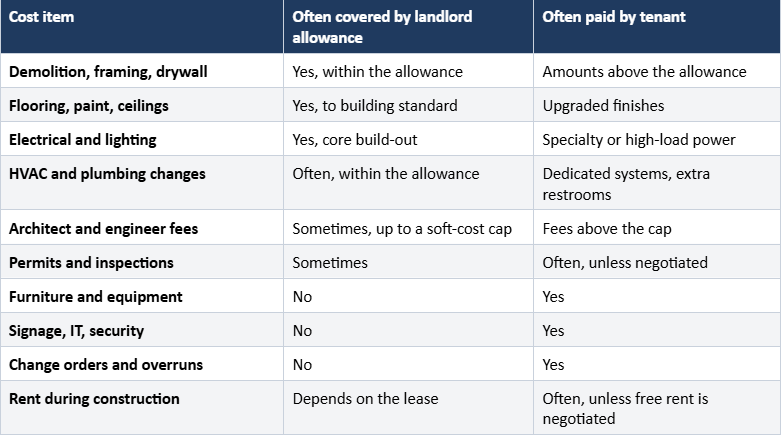
Landlord vs. Tenant Costs at a Glance
The table below shows how responsibility is commonly split. Your lease and work letter control the final answer, so treat this as a starting checklist for questions to ask.
How Much Is the Allowance, and Why Does It Vary?
There is no single standard figure. Allowances shift with market conditions and the specific space. The main factors are:
Space condition: A raw shell or first-generation space usually carries a larger allowance than second-generation space that already has walls, ceilings, and mechanical systems in place.
Lease length: Longer terms give landlords more time to recover their investment, which tends to support a bigger allowance.
Tenant strength: Landlords look at financials, business history, and guarantees before committing capital.
Market conditions: When vacancy is high, concessions grow. When it is tight, allowances shrink.
Building class and location: Premium buildings and competitive submarkets set different expectations than older or secondary buildings.
Ask your broker for recent comparable deals in the same submarket rather than relying on rules of thumb. Then compare the allowance against a realistic construction estimate, because the number that matters is the gap between the two. Our office build-out cost guide for Seattle in 2026 shows what drives that estimate.
Why the Allowance Often Falls Short
Tenants are often surprised that the allowance does not stretch as far as expected. A few common reasons:
The allowance was set before design. Lease negotiations happen long before an architect and contractor have priced the real scope.
Soft costs eat into it. Design, engineering, permits, and project management can use a meaningful share of the budget before the first wall goes up.
Existing conditions create surprises. Older buildings can reveal code upgrades, accessibility work, electrical capacity limits, or mechanical issues once walls are opened.
Specialty uses cost more. Medical, restaurant, lab, and high-density office layouts need more infrastructure than a standard office.
Permitting takes time. Seattle tenant improvements are reviewed through the Seattle Department of Construction and Inspections, and review timelines affect when construction can start and when your lease clock is running.
The fix is to price the project early. A contractor who can give you a preliminary budget during lease negotiation lets you push for the right allowance, or other concessions, before you sign.
How to Negotiate a Stronger TI Package
Once the lease is signed, most of your leverage is gone. Use these steps while you still have room to negotiate:
Get a preliminary construction budget first. Even a rough, contractor-prepared range tells you how large the gap could be.
Ask what counts toward the allowance. Get design fees, permit costs, and project management in or out in writing.
Negotiate the deadline. Request a long enough draw period to cover permitting, construction, and closeout.
Clarify the disbursement process. Ask when funds are released, what paperwork is required, and how quickly the landlord pays.
Consider free rent. Rent during construction adds real cost. A free-rent period can be as valuable as extra allowance dollars.
Confirm who owns the improvements. Understand restoration obligations and what you must remove or restore at lease end.
Have your attorney and contractor review the work letter. Scope, schedule, and approval rights in the work letter affect cost as much as the dollar amount does.
Managing the Gap Between Allowance and Actual Cost
Even a well-negotiated allowance can leave a shortfall. A few practical ways to keep the project on budget:
Bring in a general contractor during design so pricing guides decisions before drawings are final.
Prioritize permanent, code-driven work first and phase optional upgrades if funds run short.
Carry a contingency for unknown conditions, especially in older buildings.
Track every invoice against the allowance so you know exactly what is eligible for reimbursement.
Collect lien waivers and closeout documents as you go, so the landlord can release funds without delay.
This is where early involvement from a contractor pays off. Envision Builders brings preconstruction planning into commercial projects so budgets, schedules, and allowance limits are tested before construction starts.
Frequently Asked Questions
What is a tenant improvement allowance?
It is a sum of money a landlord agrees to contribute toward building out or renovating leased space for a tenant, usually stated per rentable square foot in the lease or work letter.
Who pays for tenant improvements, the landlord or the tenant?
Both, in most cases. The landlord pays up to the allowance, and the tenant pays for anything above it, plus furniture, equipment, signage, and other non-permanent items. The lease determines the exact split.
Is a TI allowance really free?
No. Landlords generally recover the cost through rent, lease length, or both. A larger allowance usually comes with trade-offs elsewhere in the deal.
Can I use the TI allowance for furniture?
Usually not. Allowances typically cover permanent improvements. Some leases allow a limited portion for fixtures or cabling, so check your work letter.
What happens if I do not use the whole allowance?
It depends on the lease. Some allowances expire if unused, some convert to a rent credit, and some are forfeited. Confirm this before signing.
Who manages the construction, the landlord or the tenant?
Either, depending on the work letter. Some landlords run the build-out, while others let the tenant choose a contractor and reimburse costs. Each model carries different control, schedule, and cost risks.
When should I talk to a contractor about my TI budget?
Before you sign the lease. A preliminary scope and budget gives you data to negotiate the allowance, free rent, and the deadlines that protect you.
Disclaimer: This article is general information, not legal or financial advice. Lease terms and allowance structures vary, so have your attorney and broker review your lease and work letter.